Audrina Signature: Elegant Script Font for Handmade Labels & Invitations
As a maker who designs printable wedding suites, hand-poured candle labels, and boutique packaging for small-batch skincare brands, I’ve tested dozens of script fonts—many beautiful, few truly practical. Audrina Signature stands out because it balances artistry with real-world usability. It’s not just another decorative script font; it’s a thoughtful Script Amp typeface built for crafters who need elegance *and* reliability.
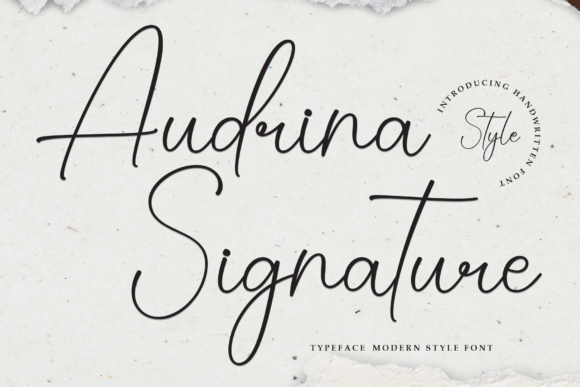
Audrina Signature has smooth, confident strokes—no shaky hesitation or awkward joins. Its letters flow like ink pulled by a fine nib: graceful curves, subtle contrast in stroke weight, and a gentle rhythm that feels personal without sacrificing clarity. Unlike overly ornate scripts that vanish at small sizes or choke cutting machines, Audrina Signature holds its shape beautifully—even at 14pt on a product tag or 20pt on a vinyl sticker cut with a Cricut Maker.
I use Audrina Signature most often for short, high-impact text: names on wedding welcome boards, boutique brand names on kraft paper tags, “Handmade with Love” on greeting cards, and monogrammed initials on tote bags. It shines where you want warmth and intention—not filler. Because it’s designed as a display font, it’s not meant for long paragraphs (skip it for ingredient lists or care instructions), but it’s perfect for titles, headers, signatures, and focal phrases that anchor your design.
Here’s where it delivers in my shop: candle labels printed on matte sticker paper, where the font’s soft terminals and open counters prevent ink bleed; SVG files for Silhouette users creating farmhouse-style wall signs—Audrina Signature cuts cleanly even with delicate swashes enabled; digital printables like planner covers or quote art, where its charm elevates perceived value without looking dated; and holiday packaging—think “Merry & Bright” on gift tags or “Handcrafted for You” stamped across lavender-scented soap boxes.
Readability matters—especially when your customer sees your work first on a phone screen or in a mockup preview. Audrina Signature avoids tight letter spacing and over-connected glyphs, so “The Smith Co.” stays legible even when scaled down for a 1.5” luggage tag. For cutting machines, I recommend using the standard OTF version (not variable) and turning off automatic ligatures if your software struggles—though most modern Cricut Design Space and Silhouette Studio versions handle its built-in alternates smoothly. The font includes stylistic sets and optional swashes, which I activate selectively: one elegant flourish on an invitation’s couple name, none on a product label where consistency and speed matter more than flair.
Pairing Audrina Signature thoughtfully makes all the difference. I almost always pair it with a clean, neutral sans serif—like Montserrat Light or Poppins Regular—for body text, pricing, or ingredient lists. That contrast gives hierarchy, professionalism, and breathing room. For vintage-inspired stationery, I’ll swap in a refined serif like Playfair Display for subheads—but only when the serif’s x-height matches Audrina’s generous lowercase height. Avoid pairing it with other scripts unless they’re dramatically different in weight and rhythm; two expressive handwritten fonts compete instead of complement.
It’s also worth checking what’s included in your Audrina Signature download. Most versions come as OpenType (.otf) files compatible with Adobe apps, Canva (via upload), Cricut, Silhouette, and Affinity Designer. Some include uppercase/lowercase, numbers, punctuation, and basic multilingual support (Latin-1 extended), which covers English, Spanish, French, and German—handy for international Etsy buyers or bilingual wedding invites. If you’re designing for clients or selling templates, confirm whether the license permits commercial use for physical products, digital downloads, and SVG-based craft files. A premium font like Audrina Signature typically includes a broad commercial license—meaning you can use it on mugs, t-shirts, stickers, Canva templates, and printable planners you sell—but always verify the vendor’s terms before listing.
What makes Audrina Signature feel special in my workflow isn’t just how it looks—it’s how it supports my brand voice. When customers see that signature-style “Est. 2021” on my apothecary jars or “With Gratitude” on thank-you cards, they don’t just read words—they sense care, continuity, and intention. That emotional resonance translates directly to repeat orders and word-of-mouth referrals. In handmade markets where trust is built through detail, a well-chosen script font becomes part of your brand identity—not decoration, but communication.
I’ve used Audrina Signature on seasonal collections too: “Cozy Season” on knitwear tags, “Sunset Gatherings” on summer picnic invitations, and “Gather & Give” on holiday gift set packaging. Each time, it adapts without losing its core personality—refined, approachable, quietly confident. And because it’s not overly trendy, it won’t look dated next year. That longevity matters when you’re building a cohesive product line or reusing design assets across multiple listings.
If you’re choosing fonts for physical goods—or designing digital printables your customers will print at home—Audrina Signature earns its place in your toolkit. It’s not flashy, but it’s trustworthy. Not loud, but unmistakably present. And in a crowded marketplace where handmade sellers compete on both aesthetics and authenticity, that quiet confidence is exactly what helps your work stand out—and stay remembered.