Rashie: A Minimalist Handwritten Font for Crafters & Sellers
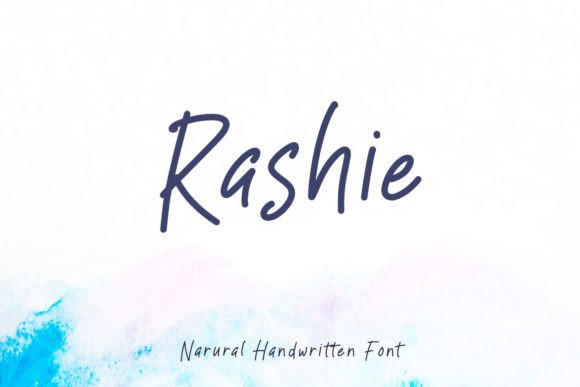
As a maker who designs printable planners, hand-stamped tags, and SVG cut files for small-batch merchandise, I’m always hunting for script fonts that balance charm with clarity—especially when it comes to real-world production. That’s why Rashie has become one of my go-to typefaces in the Script Amp collection. It’s not fussy or overly ornate—it’s a clean, minimalist handwritten font with gentle contrast, natural rhythm, and just enough personality to feel human without sacrificing legibility.
Rashie works beautifully where authenticity matters: on handmade candle labels, boutique gift tags, wedding welcome signs, or even the subtle “hand-lettered” header on a digital planner cover. Its lowercase letters flow with soft entry and exit strokes, while capitals hold presence without shouting—ideal for names, titles, or short display phrases. Because it’s intentionally minimalist, Rashie avoids the common pitfalls of script fonts: no tangled loops, no excessive swashes that snag on Cricut blades or Silhouette cut paths, and no thin hairlines that vanish at 8pt on product stickers.
I’ve used Rashie across dozens of physical and digital products—and each time, it delivers consistency. On kraft paper product tags? Crisp and warm. On matte-finish greeting cards? Elegant but approachable. In layered SVG files for t-shirt transfers? Clean vector outlines cut smoothly every time. And because it’s designed as a display font, it shines brightest at sizes 24pt and up—but I’ve successfully scaled it down to 14pt for small jar labels (with tight kerning adjustments) and even 10pt for delicate planner headers when paired with generous line spacing.
What makes Rashie especially valuable for sellers is how well it supports brand storytelling without demanding attention. Unlike bold serif fonts or ultra-modern sans serifs, Rashie whispers “handmade,” “thoughtful,” and “small business”—qualities customers actively seek in Etsy shops, local markets, and boutique packaging. When you use Rashie on a set of seasonal holiday printables—say, “Cozy Season” on a mug mockup or “Hand-Poured” on soy wax candle labels—it subtly reinforces your care and craftsmanship. Customers don’t just read the words—they feel the intention behind them.
For wedding stationery designers, Rashie adds quiet sophistication. Try it for “Mr. & Mrs.” on an acrylic place card, or “Welcome” on a chalkboard-style welcome board SVG. Its even weight distribution means it holds up beautifully in both print and vinyl-cut applications—no ghosting, no breakage in fine strokes. And because it’s a handwritten font built for real use—not just aesthetics—it includes thoughtful OpenType features like standard ligatures and contextual alternates (check your software’s glyph panel!). These small touches keep repeated letter pairs like “ff” or “th” from clashing, and give your text a more natural, less robotic rhythm.
Rashie pairs effortlessly with neutral supporting fonts—something I rely on daily. For product labels, I often combine Rashie’s headline with a light, airy sans serif like Montserrat Light or Inter Thin. The contrast creates hierarchy without competition: Rashie carries the emotional hook (“Small Batch • Hand Mixed”), while the sans serif handles practical details (ingredients, net weight, batch number). For wedding suites or boutique packaging, I’ll swap in a delicate serif like Playfair Display Italic for body text—letting Rashie anchor the invitation title or monogram with warmth and distinction.
File-wise, Rashie arrives in standard OTF and TTF formats—fully compatible with Cricut Design Space, Silhouette Studio, Canva, Adobe Illustrator, and Procreate. No hidden limitations. No missing glyphs. It supports multilingual Latin-based languages (including accented characters for French, Spanish, and German), which matters if you sell internationally or design bilingual baby shower invites. And yes—it’s a commercial font: you’re fully licensed to use Rashie in physical products you sell (mugs, tote bags, stickers), digital downloads (printables, Canva templates), client work, and even sub-licensed SVG bundles—as long as your end users aren’t redistributing the font file itself.
Here’s what I keep in mind when designing with Rashie:
- For cutting machines: Always convert to outlines before sending to your cutter—this prevents rendering hiccups and ensures smooth curves.
- For small stickers or tags: Avoid using Rashie below 12pt unless you’re pairing it with a bold sans serif subtitle for balance and scannability.
- For social media graphics: Rashie reads cleanly on mobile—even in Instagram story text overlays—when used against solid or softly blurred backgrounds.
- For packaging mockups: Test how Rashie renders at 300dpi in CMYK; its even stroke weight holds up better than high-contrast scripts under commercial printing conditions.
Whether you’re sketching ideas on paper or building a full shop identity, Rashie serves as both a tool and a tone-setter. It doesn’t try to be everything—just the right kind of handwritten elegance, reliably usable, quietly confident. That’s rare in the world of script fonts. And for makers who value both beauty and buildability, that reliability isn’t just convenient—it’s essential.
If you’re curating a working font library for your craft business, add Rashie not just as another premium font, but as a dependable voice—one that helps your products speak clearly, warmly, and authentically.